Care Homes: Revolutionary Smart Heating Solutions Transform Energy Management
Understanding energy efficiency in care homes requires recognizing the unique challenges these facilities face in maintaining comfortable environments while managing escalating operational costs. Care homes typically consume 15-20% more energy per square meter than standard commercial buildings due to their 24/7 occupancy requirements and the need to maintain consistent temperatures for vulnerable residents. With energy prices having increased by over 200% since 2021, facilities like care homes face an urgent need to find heating solutions that balance resident comfort with financial sustainability. The transformation at Clanfield Care Home demonstrates how smart heating technology can revolutionize energy management in these critical facilities, offering lessons that extend far beyond the care sector.
The Traditional Heating Challenge in Care Facilities
Think of traditional heating systems in care homes like driving a car with the accelerator stuck at full throttle. You might reach your destination, but you'll consume far more fuel than necessary and have little control over the journey. Most care homes operate with outdated boiler systems and basic thermostatic radiator valves that function like simple on-off switches, providing minimal control over individual room temperatures. This approach creates a fundamental mismatch between energy consumption and actual heating needs, particularly problematic when different areas of a building require different temperature zones throughout the day.
The challenge becomes even more complex when we consider the specific needs of care home residents. People with dementia, physical disabilities, or age-related conditions often experience temperature differently, requiring personalized comfort levels that traditional heating systems simply cannot provide efficiently. Additionally, care homes must maintain strict infection control standards, meaning rooms may be unoccupied for extended periods during cleaning or isolation procedures, yet heating continues at full capacity.
Clanfield Care Home exemplifies this challenge perfectly. Located in two acres of landscaped gardens, this facility provides long-term care and day services for residents with dementia, age-related conditions, and physical disabilities. Before implementing smart heating technology, Clanfield operated like most care homes, running two large boilers simultaneously at full power regardless of actual heating demand. This approach represents what heating engineers call "heating by assumption" rather than heating by need.

Smart Technology Implementation and Installation Process
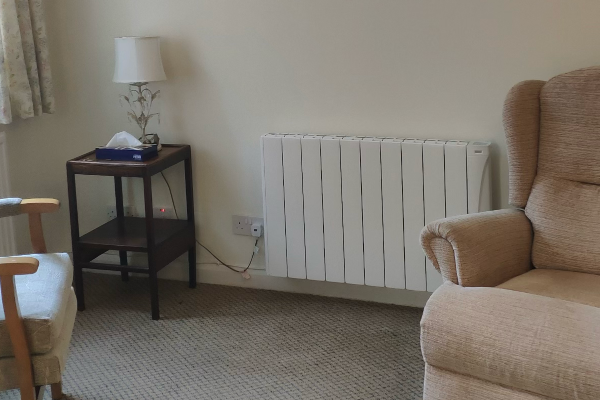
The Intelli Heat solution transforms this paradigm entirely. Rather than replacing expensive building infrastructure, which typically costs £50,000-£100,000 for a facility like Clanfield, the smart heating system installs in hours rather than months. The technology centers on intelligent radiators connected through Wi-Fi to a cloud-based management system, creating what engineers call a "distributed heating network." This means each radiator becomes an intelligent heating zone that can respond to specific temperature requirements rather than following building-wide heating commands.
Understanding how this technology works helps us appreciate its revolutionary impact. The iSense system connects thirty maintenance-free intelligent radiators through a single gateway to cloud-based management software, providing individual control for twenty-six rooms and three zones across two floors. This creates granular temperature control that allows care staff to adjust heating based on occupancy patterns, resident preferences, and daily routines. The system learns from usage patterns, automatically adjusting temperatures when rooms are unoccupied while ensuring comfortable conditions when residents return.
The installation process reveals another crucial advantage of smart heating technology. Rather than requiring specialized contractors and building disruption, Clanfield's own facilities team completed the installation after receiving training from Intelli Heat. This approach reduces installation costs while building internal expertise for ongoing system management, demonstrating how modern heating solutions can integrate seamlessly with existing operational structures.
Measurable Results and Performance Analysis
The results from Clanfield's implementation provide compelling evidence of smart heating effectiveness. Craig Campbell, Building Services Manager, initially predicted conservative savings of twenty percent based on moderate assumptions about technology utilization. However, actual performance exceeded expectations significantly. From November through December 2024, heating-related energy usage decreased by thirty percent compared to previous consumption patterns. More importantly, this reduction allowed Clanfield to operate only one of their two large boilers instead of running both simultaneously at full power.
The most revealing data comes from Clanfield's controlled comparison between identical buildings. During the implementation period, they installed iSense technology in only one of two similar structures, creating a natural experiment. The building with smart heating technology showed consistent monthly savings of twenty-six percent in November, thirty-three percent in December, with projected savings of thirty-one to thirty-five percent through March 2025. This controlled comparison eliminates variables like weather conditions or occupancy changes that might otherwise explain energy reductions, providing clear evidence of the technology's direct impact on energy consumption.
Environmental Impact and Long-Term Benefits
Understanding the environmental impact helps us appreciate the broader significance of these improvements. The transition from traditional boiler heating consuming 205 kWh per square meter annually to smart heating requiring only 155 kWh per square meter represents approximately four tonnes of prevented carbon dioxide emissions. To put this in perspective, this reduction equals removing a typical car from the road for an entire year or planting approximately one hundred mature trees.
The transformation at Clanfield demonstrates how smart technology can revolutionize care home operations while improving resident comfort. The system provides real-time monitoring and alert capabilities, giving management immediate notification when heating issues occur. This proactive approach prevents comfort problems before residents experience them, while detailed energy consumption data enables continuous optimization of heating patterns.
These results suggest that smart heating technology offers care homes a pathway to financial sustainability while maintaining high-quality resident care. The combination of reduced energy consumption, improved temperature control, and simplified maintenance creates operational advantages that extend far beyond simple cost savings, representing a fundamental shift in how these essential facilities can manage their heating requirements.