Office Heating: Smart Technology Transforms Workplace Energy Management
Understanding workplace heating efficiency requires recognizing a fundamental challenge that affects millions of office workers daily: the delicate balance between maintaining productivity and controlling energy costs. Research shows that office temperatures outside the optimal range of 20-24°C can reduce productivity by up to 15%, yet traditional heating systems often waste 40-60% of their energy heating unoccupied spaces. This creates what energy experts call the "comfort-cost paradox," where maintaining worker productivity conflicts directly with controlling operational expenses. The transformation at Joshua's office building demonstrates how intelligent heating technology can resolve this paradox, achieving both improved comfort and dramatic cost reductions that reshape how we think about workplace energy management.
The Traditional Office Heating Challenge
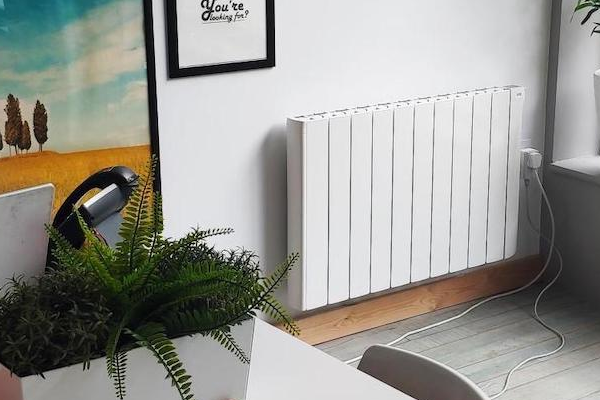
Think of traditional office heating like using a sledgehammer to hang a picture frame. The tool might accomplish the basic task, but it lacks the precision needed for efficient, effective results. Joshua's office building exemplified this problem perfectly, operating fifteen rooms with basic panel heaters that functioned like crude on-off switches. These heaters ran continuously from 6 AM to 7 PM, seven days a week, fifty-two weeks a year, consuming a constant 26 kilowatts regardless of actual occupancy needs.
This approach created several interconnected problems that help us understand why traditional heating systems fail in modern office environments. First, the system heated the entire building whenever any single room required warmth, meaning unoccupied spaces consumed energy unnecessarily. Second, tenants would request heating for two-hour periods but often leave after one hour, resulting in substantial energy waste during their absence. Third, the basic panel heaters burned out every two years due to constant overuse, creating ongoing maintenance costs and replacement expenses that compounded the system's inefficiency.
The human factor added another layer of complexity to this heating challenge. Employees often felt too cold and brought expensive portable heaters to supplement the inadequate heating system, further increasing energy consumption while creating potential safety hazards. Meanwhile, other areas became uncomfortably warm, reducing productivity and creating an environment where temperature control seemed impossible to achieve effectively.
Smart Technology Implementation and System Design
The intelligent heating solution transformed this chaotic situation through what engineers call "distributed intelligence architecture." Rather than relying on a single central system making crude heating decisions for the entire building, the new approach gives each room its own intelligent heating capability that responds to specific conditions and requirements.
Understanding how this technology works helps us appreciate its revolutionary impact on office energy management. Each intelligent radiator contains dual thermostats that continuously measure both room temperature and radiator surface temperature. This dual-sensing capability allows the system to calculate precisely how much energy each room requires to reach and maintain its assigned temperature, drawing only the exact energy load needed rather than operating at full capacity continuously.
The installation process reveals another crucial advantage of smart heating technology. The entire system installed in just two days while the offices remained fully operational, with no need for structural changes, drilling, or rewiring. This non-disruptive installation approach means businesses can upgrade their heating systems without losing productivity or disrupting daily operations, a critical consideration for commercial properties.
The zoning capabilities create what heating engineers call "micro-climate control." The system allows grouping rooms by floors or usage patterns, creating distinct heating zones that match actual building needs rather than treating the entire structure as a single heating unit. This zoning approach enables unprecedented precision in matching energy consumption to actual heating requirements.
Performance Results and Energy Savings Analysis
The transformation results provide compelling evidence of smart heating effectiveness in commercial environments. The original system consumed approximately £14,900 annually in electricity costs, while the intelligent heating solution reduced this figure to £7,700, representing a forty-five percent reduction in energy consumption. To put this in perspective, this saving equals the average annual electricity bill for approximately three typical UK households.
Understanding the mechanics behind these savings helps us appreciate why the improvement was so dramatic. The presence detection technology represents a particularly innovative feature that automatically adjusts heating based on actual occupancy. When motion sensors detect no movement in a room for a predetermined period, the system automatically switches to background mode, maintaining a minimal 12-degree temperature that prevents damage while consuming minimal energy.
The return on investment calculation reveals the financial attractiveness of smart heating technology for commercial properties. With a payback period of only twelve months, the system pays for itself through energy savings alone, after which all savings contribute directly to improved profitability. This rapid payback period makes smart heating technology particularly attractive for property owners and businesses seeking immediate operational cost reductions.
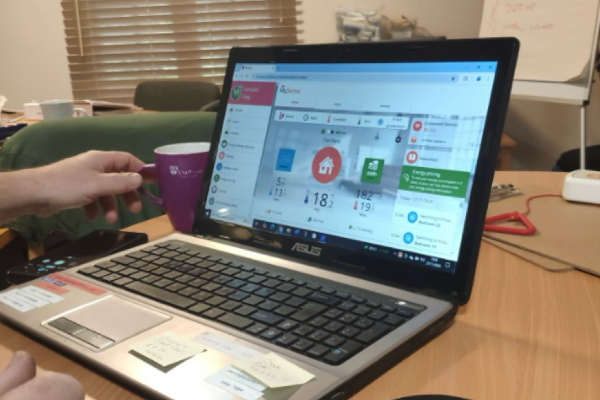
The individual control capabilities create additional value beyond simple energy savings. Each tenant receives access to a dedicated app that allows personal temperature adjustment within their space, improving satisfaction while maintaining overall system efficiency. This individual control eliminates the common office heating complaints that arise when building-wide systems cannot accommodate personal preferences.
Long-Term Impact and Operational Benefits
The transformation extends far beyond simple cost reduction, creating operational advantages that reshape how commercial properties manage their heating requirements. The remote management capabilities allow property managers to control heating systems from any location with Wi-Fi or mobile data connectivity. This means a property management company overseeing buildings in multiple cities can monitor and adjust heating across their entire portfolio through a single dashboard interface.
The maintenance benefits provide ongoing operational advantages that compound the initial energy savings. Traditional panel heaters requiring replacement every two years created recurring costs and operational disruptions. The intelligent heating system eliminates these frequent replacements while providing detailed performance monitoring that enables proactive maintenance rather than reactive repairs.
Understanding the productivity implications helps us appreciate the broader value of intelligent heating systems. By maintaining optimal temperatures consistently across different zones, the system creates comfortable working environments that support rather than hinder employee performance. Research indicates that comfortable office temperatures can improve cognitive performance by up to twenty percent, suggesting that heating system improvements create value far beyond simple energy cost reductions.
The environmental impact represents another significant benefit of smart heating technology adoption. The forty-five percent reduction in energy consumption translates to approximately 8.5 tonnes of prevented carbon dioxide emissions annually, equivalent to removing nearly two cars from the road or planting over 200 mature trees. This environmental benefit becomes increasingly important as businesses seek to reduce their carbon footprints while maintaining operational efficiency.